Signe Wiese
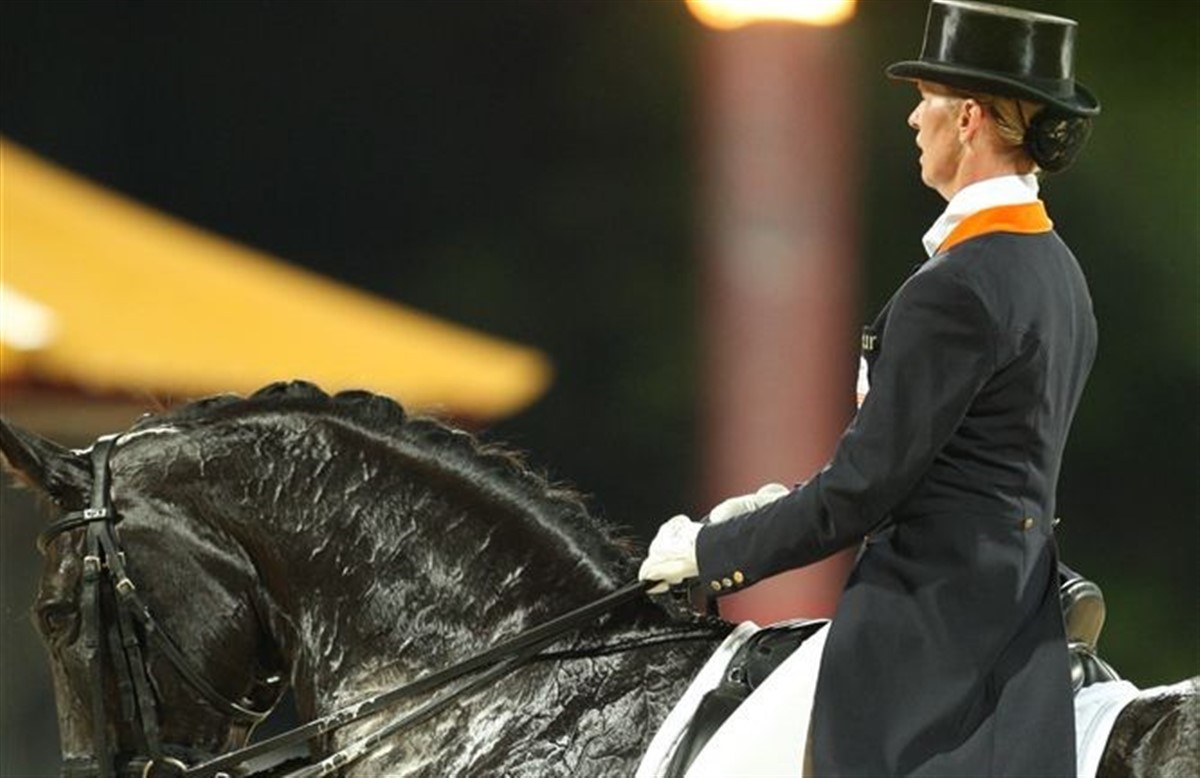

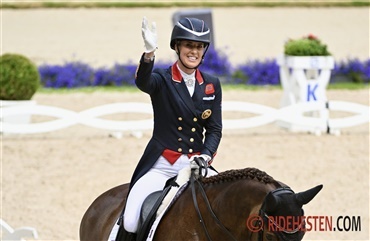
Since the last Olympic Games in 2008 this sport has experienced an extraordinary make-over which, despite the reticence of the purists, has ensured that the buzz ahead of London 2012 could hardly be more electrifying. Who could have known that one black stallion would prance into a floodlit arena on an August night in 2009 and that things would never be the same again? The Dutch combination of Totilas and Edward Gal are no longer together, and the horse whose magical spell attracted a whole new audience to this most disciplined of sports during a record-breaking spree that is already the stuff of legend, will not be returning to the country where it all began during the FEI European Championships three years ago. His new rider, Germany’s Mathias Alexander Rath, cannot compete in London due to unfortunate ill-health, but Totilas has already created a wonderful legacy - gone is the stuffiness, and the fear of making a mistake. If riders are prepared to take the risk, the rewards for expressive, inspired performances – while still retaining the accuracy – are scores like we have never seen before. And the records just keep on tumbling. At Hagen CDI 4* in April this year, Britain’s Charlotte Dujardin and Valegro brought the German crowd to their feet when setting a new standard in the Grand Prix Special with a mark of 88.022%. Dujardin, who turned 27 last Friday, was a member of the quartet that claimed Great Britain’s first ever team gold medal at the FEI European Dressage Championships in Rotterdam (NED) last August. Not long ago, Olympic glory would have seemed an almost impossible dream for this year’s host nation. But now they are surely destined for both team and individual medals - the only question is what colour they will be, as Dujardin joins her mentor, the inimitable Carl Hester, and Alltech FEI World Equestrian Games™ triple silver medallist Laura Bechtolsheimer in the Grand Prix, which gets the first leg of the team and individual competitions underway on 2 August. Team Medals The Team medals will be decided after the Grand Prix Special on 7 August, which is also the second Individual qualifier from which the top-18, and those tied for 18th place, will go through to the Freestyle Final two days later. The Freestyle to Music is a stand-alone competition from which the individual champion will emerge. And it’s going to be like a pressure-cooker from the outset. Teams consist of just three riders, and with all three scores counting there is absolutely no margin for error. In the other two Olympic disciplines – Eventing and Jumping – there are drop scores which leave some “wriggle room” for an off-form performance. Not so in Dressage – the slightest mistake, or spooky moment, will prove desperately costly, and of course an elimination will prove terminal for team chances. So, with a huge weight of expectation on their shoulders, riders must try to balance complete accuracy and obedience with enough sparkle and flair to get that extra edge right from the very start. No mean feat in the cauldron of tension that the Greenwich Park arena will become over the next few weeks. And there is no breathing space either. Previously the team result was based on performances in the Grand Prix alone. However at London 2012, for the very first time, the results of both the Grand Prix and the Grand Prix Special will be combined to decide the final team classification. The Dressage Tests are the FEI Grand Prix, the FEI Grand Prix Special and the FEI Grand Prix level Freestyle – and you can find them on the following links : Grand Prix (Edition 2009): Grand Prix Special (Edition 2011) (update 22.09.11) and Freestyle to Music Grand Prix (Edition1999, revision 2009). Outstanding The country with the most outstanding record in Olympic Dressage however is, undoubtedly, Germany with 12 Team and seven individual titles to their credit. And the German team heading for London 2012 has a really refreshing feel to it. Helen Langehanenberg, who showed spectacular form throughout the Reem Acra FEI World Cup™ Dressage league last season, and who was just pipped for the series title by Cornelissen at the Final in ‘s-Hertogenbosch (NED) in April, was an obvious choice. But she was denied the honours in the Grand Prix at Aachen (GER) two weeks ago by Kristina Sprehe, who also went on to win the Grand Prix Special at the premier German fixture. Langehanenberg was back on top in the Aachen Freestyle, but Sprehe had made her mark, and Dorothee Schneider, who sprang into contention at the German Championships in Balve, claimed the third available team spot when finishing behind these two in that Freestyle. They are likely to prove a formidable force. While the battle for the team medals is likely to be waged between the British, Dutch and Germans – with additional pressure from Denmark, USA and Sweden – there is plenty of scope for many other spectacular performances. America’s Steffen Peters and Ravel followed their victory at the FEI World Cup™ Dressage Final in Las Vegas (USA) in 2009 with double-bronze at the Alltech FEI World Equestrian Games™ a year later. Denmark's Nathalie zu Sayn-Wittgenstein can always be relied upon for a great effort at the right time, and the Spanish can never be discounted. Beatriz Ferrer-Salat has produced some excellent results of late, while no major Dressage fixture would be the same without the flamboyant Juan Manuel Munoz Diaz, the showman of all showmen who knows exactly how to please the crowds. The stage is set for an Olympic experience like none before. The last time the sport of Dressage set the world on fire, the event took place in the shadow of Windsor Castle and the winds of change altered everything. Three years later the spotlight returns to England once again, this time to Greenwich Park which is framed by many of the most iconic buildings on the London skyline and overlooks the River Thames. It is a superb location, and the perfect backdrop for Dressage that is set to bring the equestrian events at the Games of the XXX Olympiad to a spell-binding conclusion. Source: FEI